Your RV Roof Won't Last 10 Years in Florida (Here's How to Stretch It to 12)
Florida sun and rain wear out RV roofs in 7-12 years vs. 12-15 in milder climates. Annual Dicor lap-sealant maintenance costs $185-$485 and adds 3-4 years of roof life. Recoat at year 5 ($1,850-$3,250
Florida sun and rain wear out RV roofs in 7-12 years vs. 12-15 in milder climates. Annual Dicor lap-sealant maintenance costs $185-$485 and adds 3-4 years of roof life. Recoat at year 5 ($1,850-$3,250) buys another 5+ years. Here's what to do every year and what to expect.
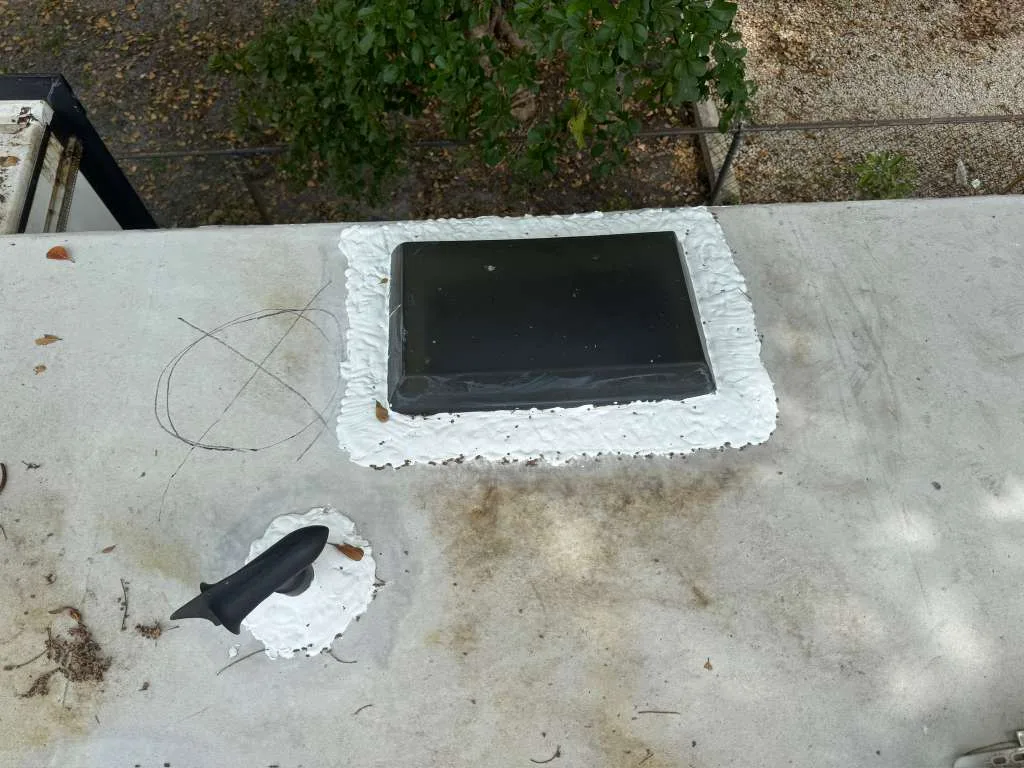
Why Florida roofs don't last as long as the spec sheet says
RV roof manufacturers spec their products in lab conditions or temperate climates. Florida is neither. We have UV exposure that's 30-40% higher than the US average, sustained heat that cycles seals daily, and afternoon thunderstorms that pressure-wash the roof. The factory's 10-year warranty assumes Ohio, not Ocala.
Real-world numbers: a TPO or EPDM rubber roof that should last 15 years lasts 8-12 in Florida. A fiberglass roof with proper care lasts 15-20+ years anywhere - those age better. The cap-corner trim, skylights, vents, and antenna seals all fail faster in Florida than the brochure promises.
Annual maintenance is the difference
The single most-impactful thing you can do for your roof is annual Dicor lap-sealant maintenance. Dicor is the goopy white sealant on every penetration - around the AC, vents, antenna, ladder mount, and along every cap edge. It's doing 80% of the waterproofing work.
Dicor cracks in 3-5 years in Florida UV. Once it cracks, water gets under the rubber, the wood substrate rots, and now you're not patching seams - you're rebuilding. Annual lap-sealant inspection and touch-up is $185-$485 and prevents most roof failures we see.
DIY version: walk the roof in spring, inspect every penetration with your eyes and a fingernail, and add fresh Dicor self-leveling lap sealant where you see cracks. Tube of Dicor is $15. Takes about an hour. Save the $185-$485 if you're up for it.
What kills roofs faster than the manual says
Three things accelerate roof failure beyond normal wear. First, parking under trees. Tree sap, oak leaves, and bird droppings all eat at the rubber surface. If you park under trees, plan on twice-yearly cleaning instead of annual.
Second, ignoring small leaks. A drip you barely notice in the bedroom turns into a soft floor in 18 months. The fix at "barely notice" stage is $185 of Dicor. The fix at "soft floor" stage is $2,500+. Don't ignore.
Third, walking on roofs you shouldn't. Most modern fiberglass and TPO roofs are walkable - but only on the structural rafters, not the panels between them. If you put a foot through a roof panel because you didn't know where the rafter was, you've turned a $0 inspection into a $5,000 repair. Know your roof or hire it out.
When to recoat
Recoating is a roof-life extender that buys you 5-7 more years on a tired-but-not-dead roof. Signs you need recoating: chalking on the rubber surface (white powder when you wipe it), small surface cracks visible from inspection, loss of flexibility in the membrane, or any seam that won't hold sealant.
Most Florida-stored rigs need recoating between year 5-7. The product matters: we use Liquid Roof (EPDM-based) for rubber roofs because it stays flexible. Avoid Liquid Rubber (acrylic-based) - it stiffens in Florida heat.
Recoating cost: $1,850-$3,250 depending on rig length and condition. We do it at your storage location over 1-2 days.
When it's time to replace
Some roofs are past saving. Signs: multiple soft spots in the substrate (wood rot), large delamination areas, chronic leaks even after multiple repair attempts, or roof material that's so degraded it tears when you try to remove old sealant.
Full roof replacement runs $4,250-$5,200+ depending on length and material. It's a 2-3 day job at your storage facility. We strip the old material, replace any rotted substrate, and install new EPDM or TPO membrane plus fresh sealant on every penetration.
Older rigs (15+ years) sometimes aren't worth replacing the roof - the cost approaches the rig's value. We'll be honest about whether replacement makes financial sense.
What about cap rails and trim?
The aluminum cap rails along your roof's edge are often overlooked but they're a major leak point. Salt-air corrosion eats the screws, the rail loosens, and water wicks down inside the wall.
Inspect cap rails annually. Look for missing or rusted screws, separation between the rail and the body, or any cracking in the sealant under the rail edge. Replace screws as needed (stainless steel only) and reseal under the rail with butyl tape.
Full cap-rail replacement is rare but happens on older Florida rigs - usually $785-$1,450 depending on length. EternaBond reinforcement on the cap rail is a good preventive measure for $245-$485.
Florida-specific roof care schedule
Here's what I'd recommend for any Florida-stored RV: spring (after winter storage) - full roof walk, Dicor inspection, AC unit gasket check, debris clear-off, 303 protectant on all rubber. Summer - mid-season inspection during a cooler morning, especially after a major thunderstorm. Fall (before winter storage) - second Dicor inspection, AC gasket check, slide topper inspection.
Add: every 5 years, plan budget for either recoat or major repair. By year 10, plan for full replacement decision. By year 15, the roof is on borrowed time and you're either replacing or selling.
We do a $185 walk-the-roof inspection if you don't want to climb up there yourself. Cheap insurance against water damage. - Earl
Got questions about your rig? Text a photo to (866) 437-4848 - one of us will take a look and tell you straight. - Earl
Common Questions About This
Can I walk on my RV roof?
Most fiberglass and TPO roofs hold a person on the structural areas. Not the panels between rafters. If you don't know your structure, send us a photo and we'll tell you where to step.
Should I use silicone or Dicor?
Dicor every time on rubber roofs. Silicone doesn't bond to EPDM and makes future repairs harder. - Earl
How often should I reseal?
Lap-sealant inspection annually. Full perimeter reseal every 3-4 years in Florida. Recoat every 5-7.
What's the difference between EPDM and TPO?
Both are rubber-style roofing. EPDM is older, more flexible, easier to repair. TPO is newer, slightly more reflective, harder to repair. Both work in Florida.
Will recoating void my warranty?
If the roof is under manufacturer warranty, possibly. Most warranties expire by year 3 anyway, so it rarely matters. Check first if you're early.
Keep Reading
Hand-picked services, cities, and articles connected to this post.